A suspension trainer can make an ordinary exercise look considerably more demanding. The straps move, the body has to stabilize itself, and even a familiar movement such as a row or squat can feel different from its floor-based equivalent.
That instability is often presented as an advantage. Suspension systems are marketed as tools for developing functional strength, coordination and athletic performance. But does making an exercise less stable actually help young athletes run faster or jump higher?
Researchers in China put that question to the test in a randomized controlled trial published on September 21, 2026, in BMC Sports Science, Medicine and Rehabilitation [1].
They compared suspension training with conventional bodyweight resistance training in 72 previously untrained adolescent boys. A third group served as a control.
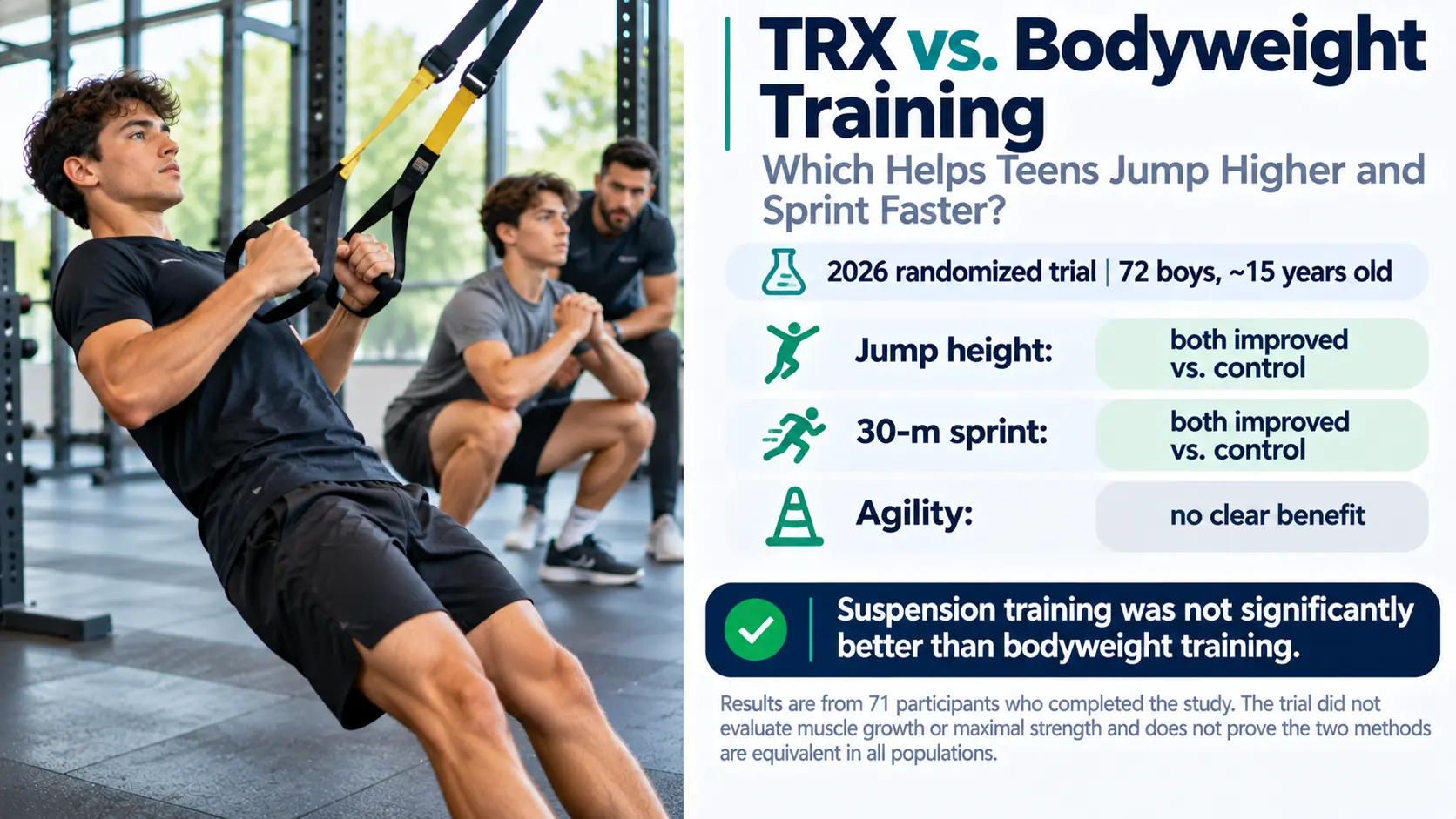
Both exercise programs improved vertical jump height and 30-meter sprint performance compared with the control condition. Neither produced a statistically significant advantage over the other.
For coaches working with beginners, the results challenge a familiar assumption: adding specialized equipment does not necessarily make an exercise program more effective.
Why Suspension Training Has Become So Popular
Suspension training uses straps anchored above the body to provide resistance through body weight and gravity. Depending on the exercise, participants may hold the handles or place their feet in the straps.

Changing body position alters the resistance. Leaning farther backward during a suspension row, for example, generally makes the movement more demanding.
The equipment also introduces a stabilization challenge. Because the handles can move, the athlete must control the position of the trunk, shoulders and limbs throughout the exercise.
These characteristics make suspension training versatile. It can be used for pushing, pulling, squatting and trunk exercises without requiring a conventional weight-training setup.
FitnessProgramer’s guide to the benefits of TRX suspension training explains the equipment’s practical appeal, including portability and exercise variety.
Yet greater instability is not the same thing as greater athletic improvement.
A challenging exercise may produce substantial muscular effort without providing the most specific stimulus for sprinting, jumping or changing direction.
That distinction is particularly relevant when training adolescents who have little previous resistance-training experience.
How the Researchers Compared the Two Methods
The trial enrolled 72 healthy, untrained male adolescents with an average age of 14.74 years.
Participants were randomly assigned to three groups, initially containing 24 boys each:
- Suspension training (ST): Resistance exercises performed using a suspension system.
- Bodyweight resistance training (RT): Conventional bodyweight exercises without suspension equipment.
- Control (CON): A comparison condition without the additional resistance-training intervention.
One participant in the bodyweight group withdrew because of an unrelated illness. The final analysis therefore included 71 boys: 24 in suspension training, 23 in bodyweight training and 24 in the control group.
The researchers assessed four performance outcomes.
The primary outcome was countermovement jump (CMJ), a commonly used test of lower-body explosive performance.
Secondary outcomes included a 30-meter sprint, a 2-kg medicine-ball throw and the T-Agility test.
These tests examine different abilities. A vertical jump measures explosive upward movement, while a sprint evaluates rapid forward acceleration and running performance. A medicine-ball throw assesses upper-body explosive performance, and the T-Agility test involves changing direction along a prescribed course.
The researchers used baseline-adjusted statistical comparisons to account for differences in initial performance. They also corrected their pairwise comparisons for multiple testing.
That last step is important because testing several outcomes and group combinations increases the chance of finding a statistically significant result by chance.
Jump Height and Sprint Performance: Where Both Methods Worked
The strongest results appeared in the countermovement jump and 30-meter sprint.
Compared with the control group, both training groups showed statistically significant advantages after accounting for baseline performance.
| Performance outcome | Suspension vs. control | Bodyweight vs. control |
|---|---|---|
| Countermovement jump | +4.82 cm | +3.71 cm |
| 30-meter sprint time | −0.200 seconds | −0.127 seconds |
These values are adjusted between-group differences, not necessarily the raw improvement experienced by each participant.
For the countermovement jump, the suspension group had an adjusted advantage of 4.822 cm over the control group. The 95% simultaneous confidence interval ranged from 3.198 to 6.445 cm, with p < 0.001.
The bodyweight group showed a 3.710 cm advantage, also statistically significant (p < 0.001).
The sprint findings followed a similar pattern.
Suspension training produced an adjusted 0.200-second faster result relative to control, while conventional bodyweight training produced a 0.127-second advantage.
Both differences were statistically significant after correction.
In a short sprint, fractions of a second can be meaningful. But those numbers should not be confused with proof that one training method was better than the other.
Although the point estimates were numerically larger for suspension training, the direct comparison between suspension and bodyweight groups was not statistically significant.
A larger number in one column does not establish superiority when the uncertainty around the difference remains substantial.
Why Suspension Training Wasn’t a Clear Winner
Suspension training changes the demands placed on the body, but athletic performance is not determined by exercise difficulty alone.
For a beginner, conventional squats, lunges, push-ups and other bodyweight movements may already provide a substantial training stimulus.
The athlete learns to coordinate movements, control joint positions and generate force more effectively.
Adding straps can make an exercise feel less stable, but the resulting challenge does not automatically translate into faster running or higher jumping.
There is also the question of specificity.
Sprinting requires rapid force production against the ground, effective coordination and efficient running mechanics. Jumping requires an explosive sequence of force generation through the lower body.
A suspension exercise can contribute to general physical preparation without necessarily reproducing those demands more effectively than a conventional bodyweight movement.
The trial does not identify the precise mechanism behind the improvements. It does, however, show that both approaches were capable of producing measurable performance benefits in this group of beginners.
For coaches, that opens the door to choosing exercises based on availability, progression and athlete preference rather than assuming the less stable option is automatically superior.
Agility Didn’t Improve in the Same Way
The T-Agility test produced a different result.
The overall group comparison was not statistically significant (p = 0.278). None of the pairwise comparisons showed a clear advantage.
That is worth considering because agility and sprinting are often grouped together under the broad label of athleticism.
Running quickly in a straight line and changing direction efficiently are related, but they are not identical abilities.
A change-of-direction task may involve braking, repositioning the body, controlling lateral movement and accelerating again.
Those demands can require training that differs from the movements used to improve general lower-body strength or straight-line speed.
The trial’s findings do not prove that suspension or bodyweight training can never improve agility. They show that these particular interventions did not establish an additional advantage on the T-Agility test in the studied population.
For athletes who need better change-of-direction performance, coaches may need to include drills that specifically develop deceleration, directional changes and movement technique.
What Happened in the Medicine-Ball Throw Test?
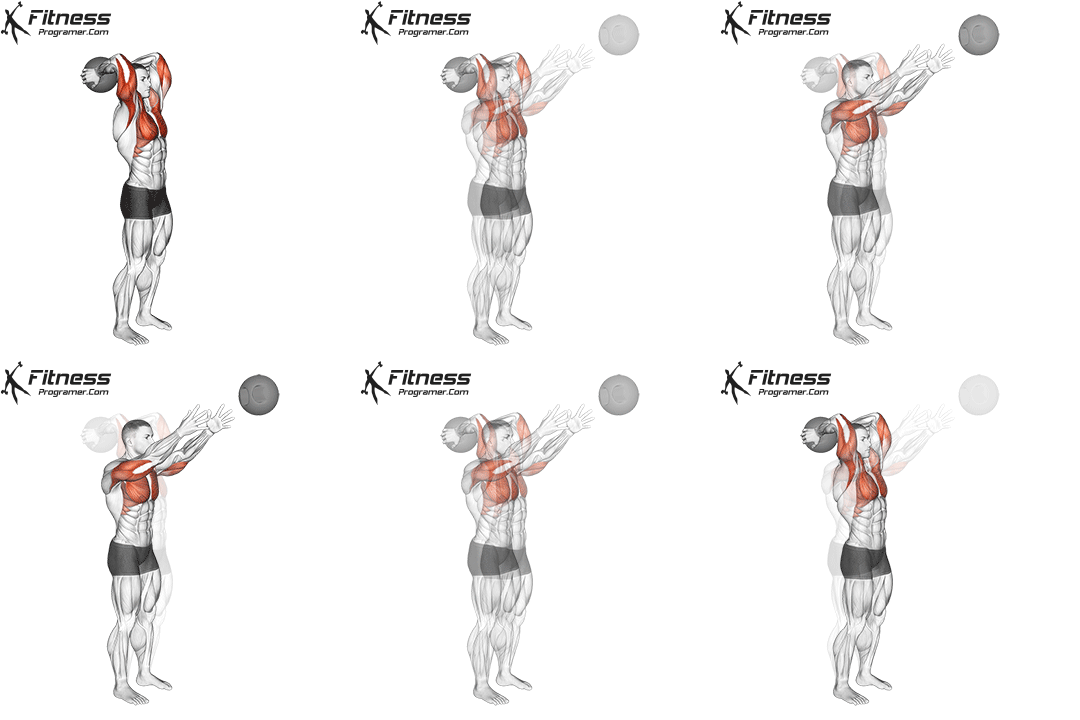
The medicine-ball throw results require a closer look.
The initial overall statistical test found a significant group effect (p = 0.034).
At first glance, that might appear to indicate that one training method improved upper-body explosive performance.
However, the researchers then examined the individual comparisons between groups and applied Holm correction for multiple testing.
After that correction, none of the three pairwise comparisons remained statistically significant.
The overall test and the corrected pairwise tests answer different statistical questions. A significant overall result does not guarantee that a particular pair of groups differs reliably once multiple comparisons are considered.
It would therefore be inaccurate to claim that suspension training clearly outperformed conventional bodyweight exercise for medicine-ball throwing.
The evidence was not strong enough to support that conclusion.
What Coaches Can Learn From the Results
The practical lesson is not to abandon suspension training. It is to stop treating equipment complexity as a reliable measure of training effectiveness.
A suspension trainer offers useful exercise variations, adjustable body angles and opportunities to challenge trunk and shoulder stabilization.
Traditional bodyweight training offers its own advantages: minimal equipment, straightforward instruction and easy integration into school or team environments.
For a beginner, either approach can provide meaningful resistance-training exposure.
A coach deciding between them might consider whether the athlete can perform the movement with control, whether the exercise can be progressed appropriately and whether the session supports the intended performance goal.
FitnessProgramer’s TRX suspension exercise collection includes examples of rows, chest presses and lower-body variations. These can help illustrate the range of movements available, although the collection is not the intervention protocol used in the trial.
For coaches focused specifically on explosive athletic development, the site’s power training guide provides additional background on plyometric, ballistic and strength-based approaches.
Those methods should be selected according to the athlete’s experience, physical development and ability to perform them safely.
Can You Improve Sprinting and Jumping Without Expensive Equipment?
For previously untrained adolescents, the answer appears to be yes.
The bodyweight group improved both countermovement jump and 30-meter sprint performance relative to the control condition.
That is useful for schools, community sports programs and coaches who do not have access to a fully equipped strength facility.
A carefully organized bodyweight program can introduce resistance exercise and help develop physical qualities relevant to sport.
It would be a mistake, however, to interpret the trial as proof that equipment is never useful.
As athletes become stronger and more experienced, increasing resistance or changing exercise selection may become necessary to continue progressing.
Suspension trainers, free weights, machines and other tools can all serve different purposes.
The relevant question is not whether a program uses equipment, but whether the exercises provide an appropriate stimulus for the athlete and the desired adaptation.
How This Research Connects to Muscle Growth in Young People
A separate 2026 systematic review and meta-analysis examined muscle hypertrophy in children and adolescents [2].
That review found that resistance training could produce measurable increases in muscle size during youth, challenging the claim that strength development before adulthood occurs exclusively through neural adaptations.
The suspension-training trial investigated a different set of outcomes.
It measured jump performance, sprinting, agility and medicine-ball throwing—not muscle hypertrophy or maximal strength.
The two studies should not be combined into a claim that suspension training produces more or less muscle growth than conventional bodyweight exercise.
Instead, they illustrate the range of adaptations that youth resistance training can produce.
Muscle size, maximal strength, jumping ability and sprint performance are related physical qualities, but improvement in one does not establish an identical improvement in the others.
A youth program can legitimately prioritize movement competence and athletic performance without making muscle growth its primary objective.
The Study’s Limitations Deserve Attention
The trial involved only previously untrained male adolescents, with an average age close to 15.
The results may not apply to girls, younger children, adults or athletes with substantial resistance-training experience.
Only 71 of the 72 randomized participants were included in the final analysis. Because the missing participant’s individual data were unavailable, the researchers could not conduct an intention-to-treat analysis.
That is relevant because randomization is intended to preserve comparability between groups, and excluding participants after allocation can introduce bias.
The trial was also registered retrospectively, on April 23, 2026. Prospective registration is generally preferable because it establishes the intended outcomes and analyses before results are available.
Another limitation is the narrow range of measured outcomes. The study did not assess changes in muscle size or maximal strength.
It also cannot establish whether the observed performance improvements would persist after training stopped or whether the same pattern would appear over a much longer training period.
Finally, a non-significant difference between suspension and bodyweight training is not proof that the methods are exactly equivalent.
Demonstrating equivalence requires a study designed around a predefined acceptable difference, rather than simply failing to detect superiority.
Which Training Method Should Young Athletes Choose?
A suspension trainer may be a good choice when a coach wants adjustable resistance, additional exercise variety or a different stabilization challenge.
Conventional bodyweight training may be preferable when equipment is limited, several athletes need to train together or the priority is teaching foundational movements.
The 2026 trial found that both approaches improved jumping and straight-line sprint performance in previously untrained adolescent boys. It did not identify a clear winner between them.
For a coach working with beginners, that is a useful result.
There is no need to purchase specialized equipment solely because it is marketed as more functional. Equally, there is no reason to reject suspension training when it fits the program and the athlete can use it safely.
The quality of the exercise, the progression and the consistency of training deserve more attention than the equipment label.
References
[1] Wang Y, Sun M, Yang Y, Xu W, Batrakoulis A. (2026). Effects of suspension training and bodyweight resistance training on neuromuscular power, sprint, and agility performance in untrained male adolescents: a three-arm randomized controlled trial. BMC Sports Science, Medicine and Rehabilitation. https://doi.org/10.1186/s13102-026-02106-9
[2] Komm Y, et al. (2026). Effects of Resistance Training on Muscle Hypertrophy in Children and Adolescents: A Systematic Review and Meta-Analysis. Sports Medicine. https://doi.org/10.1007/s40279-026-02499-0