Contents
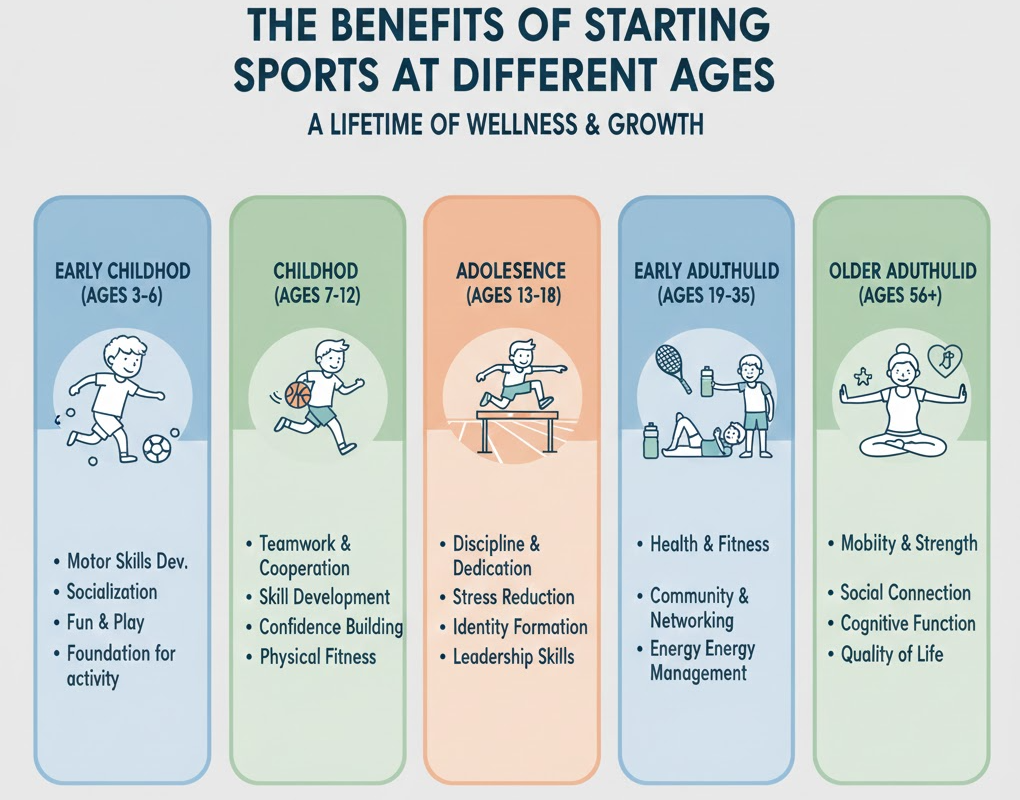
- 1. Early Childhood (Ages 3–6): Building the Foundation
- 2. Childhood (Ages 7–12): Skill Development and Confidence
- 3. Adolescence (Ages 13–18): Identity, Discipline, and Mental Health
- 4. Young Adulthood (Ages 19–35): Performance and Lifestyle Habits
- 5. Middle Adulthood (Ages 36–55): Disease Prevention and Energy
- 6. Older Adulthood (Ages 56+): Longevity and Independence
- 7. Is It Ever Too Late to Start Sports?
- Conclusion
Sports and physical activity play a crucial role in human health, development, and overall quality of life. However, the benefits of starting sports vary depending on the age at which an individual begins. From early childhood development to healthy aging in later life, engaging in sports at different stages offers unique physical, psychological, and social advantages.
Modern research consistently demonstrates that it is never too early—or too late—to start participating in sports. While early exposure enhances motor skills and cognitive growth, adult and senior participation contributes to disease prevention, mental health, and longevity. Understanding age-specific benefits helps parents, educators, healthcare professionals, and individuals make informed decisions about physical activity.
This article provides an in-depth, research-backed exploration of the benefits of starting sports at different ages, examining childhood, adolescence, adulthood, and older age groups. By the end, you will have a comprehensive understanding of why sports should be a lifelong habit.
1. Early Childhood (Ages 3–6): Building the Foundation
Physical Development Benefits
Starting sports during early childhood supports fundamental motor skill development. Activities such as running, jumping, throwing, and balancing help children develop coordination, flexibility, and muscle strength.
Research published in the Journal of Pediatrics indicates that children who engage in regular physical activity before age six demonstrate superior gross motor skills compared to sedentary peers. These foundational abilities are critical for long-term physical literacy and injury prevention later in life.
Cognitive and Brain Development
Physical activity stimulates brain growth in young children. Movement-based activities increase blood flow to the brain, enhancing neural connectivity and executive function.
A 2018 study from the British Journal of Sports Medicine found that physically active preschool children showed improved attention span, memory, and problem-solving skills. Sports also support early learning by reinforcing concepts such as following rules, spatial awareness, and cause-and-effect relationships.
Social and Emotional Growth
Participating in age-appropriate sports helps children develop social skills such as sharing, cooperation, and emotional regulation. Group activities encourage communication and empathy while boosting self-confidence.
According to the American Academy of Pediatrics, children involved in structured physical play exhibit lower levels of anxiety and improved emotional resilience.
Sports Recommendations for Early Childhood (Ages 3–6)
- Running and free play
- Swimming
- Gymnastics
- Dance and movement games
- Balance bikes
At this age, children are developing fundamental motor skills rather than sport-specific techniques. Activities should focus on fun, movement variety, and coordination, not competition.
2. Childhood (Ages 7–12): Skill Development and Confidence
Improved Physical Fitness and Bone Health
During middle childhood, bones and muscles undergo rapid growth. Weight-bearing sports such as soccer, basketball, and gymnastics strengthen bones and reduce the risk of osteoporosis later in life.
A longitudinal study from the Journal of Bone and Mineral Research found that children who participated in sports between ages 7 and 12 had significantly higher bone density as adults.
Healthy Weight Management
Childhood obesity is a growing global concern. Regular sports participation increases energy expenditure and supports healthy body composition.
The World Health Organization (WHO) reports that children who engage in at least 60 minutes of moderate-to-vigorous physical activity daily have a lower risk of obesity, type 2 diabetes, and cardiovascular risk factors.
Academic and Behavioral Benefits
Sports participation has been linked to improved academic performance. Physical activity enhances concentration, classroom behavior, and learning outcomes.
A study conducted by the Centers for Disease Control and Prevention (CDC) found a positive correlation between physical activity and academic achievement, including better grades and standardized test scores.
Sports Recommendations for Children (Ages 7–12)
- Soccer
- Basketball
- Tennis
- Martial arts (judo, karate, taekwondo)
- Swimming
- Athletics (running, jumping, throwing)
3. Adolescence (Ages 13–18): Identity, Discipline, and Mental Health
Physical Strength and Athletic Performance
Adolescence is characterized by hormonal changes that support muscle growth, endurance, and strength. Starting or continuing sports during this phase maximizes physical potential.
Research from the European Journal of Applied Physiology suggests that adolescents involved in regular sports training develop better cardiovascular fitness and muscular strength than inactive peers.
Mental Health and Stress Management
Teenagers face increased academic pressure, social challenges, and emotional fluctuations. Sports serve as a powerful tool for managing stress and preventing mental health disorders.
A 2020 meta-analysis published in The Lancet Psychiatry showed that adolescents who participate in sports report lower levels of depression, anxiety, and perceived stress.
Life Skills and Character Development
Sports teach discipline, goal-setting, teamwork, and resilience. These skills translate into improved self-esteem and leadership abilities.
Studies from the Journal of Adolescent Health indicate that adolescents involved in organized sports are less likely to engage in risky behaviors such as substance abuse and delinquency.
Sports Recommendations for Adolescents (Ages 13–18)
- Football (soccer), basketball, volleyball
- Strength training (supervised)
- Athletics
- Cycling
- Swimming
- Combat sports
4. Young Adulthood (Ages 19–35): Performance and Lifestyle Habits
Peak Physical Performance
Young adulthood represents the peak of physical capacity for most individuals. Starting sports during this period can rapidly improve strength, endurance, and flexibility.
Research from the American College of Sports Medicine shows that adults who begin structured exercise programs in their 20s and 30s experience rapid cardiovascular and metabolic improvements within months.
Stress Reduction and Mental Well-Being
Balancing careers, education, and personal life can be stressful. Sports provide an effective outlet for mental relaxation and emotional balance.
A study in the Journal of Mental Health found that physically active young adults reported higher life satisfaction and lower levels of burnout.
Establishing Lifelong Habits
Starting sports in early adulthood increases the likelihood of maintaining an active lifestyle long-term. Habit formation during this stage significantly influences future health outcomes.
Sports Recommendations for Young Adults (Ages 19–35)
- Fitness training (gym workouts)
- Cross-training and functional training
- Running and marathon training
- Team sports (football, basketball, volleyball)
- Martial arts
- Climbing and adventure sports
5. Middle Adulthood (Ages 36–55): Disease Prevention and Energy
Cardiovascular Health
Regular sports participation during middle age reduces the risk of heart disease, hypertension, and stroke.
According to the American Heart Association, adults who engage in moderate physical activity for at least 150 minutes per week reduce cardiovascular disease risk by up to 30%.
Weight Control and Metabolic Health
Metabolism naturally slows with age, increasing the risk of weight gain. Sports help maintain muscle mass and metabolic rate.
A study in Diabetes Care found that physically active adults had a 40% lower risk of developing type 2 diabetes compared to inactive individuals.
Mental Clarity and Cognitive Function
Exercise improves brain health by enhancing neuroplasticity and blood circulation.
Research published in Neurology indicates that adults who engage in regular physical activity show slower cognitive decline and better memory performance.
Sports Recommendations for Middle-Aged Adults (Ages 36–55)
- Brisk walking and jogging
- Cycling
- Swimming
- Pilates
- Yoga
- Tennis and padel
6. Older Adulthood (Ages 56+): Longevity and Independence
Maintaining Mobility and Balance
Sports and physical activity help preserve mobility, flexibility, and balance, reducing the risk of falls and injuries.
A randomized controlled trial in the Journal of Aging and Physical Activity demonstrated that older adults participating in balance-focused sports reduced fall risk by nearly 40%.
Chronic Disease Management
Exercise plays a vital role in managing chronic conditions such as arthritis, osteoporosis, and cardiovascular disease.
The National Institute on Aging reports that physically active seniors experience improved pain management, joint function, and overall quality of life.
Mental Health and Social Connection
Sports combat loneliness and depression in older adults by promoting social interaction and purpose.
A large-scale study published in JAMA Psychiatry found that seniors who engaged in group physical activities had lower rates of depression and cognitive impairment.
Increased Longevity
Regular sports participation is associated with longer life expectancy.
Research from The British Medical Journal (BMJ) suggests that adults who engage in regular moderate exercise live, on average, 3–7 years longer than sedentary individuals.
Sports Recommendations for Older Adults (Ages 56 and Above)
- Walking
- Swimming
- Water aerobics
- Yoga and tai chi
- Light strength training
- Golf
7. Is It Ever Too Late to Start Sports?
Scientific evidence strongly supports that starting sports at any age yields significant benefits. While early starters may gain developmental advantages, late starters still experience meaningful improvements in health, function, and well-being.
A study in Mayo Clinic Proceedings concluded that individuals who began exercising after age 50 still reduced mortality risk and improved physical function compared to inactive peers.
Conclusion
The benefits of starting sports vary across the lifespan, yet one principle remains constant: physical activity is essential at every age. From enhancing brain development in children to preserving independence in older adults, sports provide holistic benefits supported by extensive scientific research.
Whether starting at age five or fifty-five, engaging in sports improves physical health, mental resilience, social connection, and overall quality of life. Encouraging age-appropriate sports participation is a powerful investment in lifelong well-being.
References
- World Health Organization. Physical Activity Guidelines.
- American Academy of Pediatrics. The Importance of Play in Promoting Healthy Child Development.
- British Journal of Sports Medicine (2018). Physical Activity and Cognitive Development in Children.
- Journal of Bone and Mineral Research. Youth Sports and Adult Bone Density.
- Centers for Disease Control and Prevention (CDC). Physical Activity and Academic Achievement.
- The Lancet Psychiatry (2020). Exercise and Mental Health in Adolescents.
- American College of Sports Medicine. Exercise Guidelines for Adults.
- American Heart Association. Physical Activity and Cardiovascular Health.
- Neurology Journal. Physical Activity and Cognitive Aging.
- Journal of Aging and Physical Activity. Fall Prevention Through Exercise.
- JAMA Psychiatry. Physical Activity and Mental Health in Older Adults.
- The British Medical Journal (BMJ). Exercise and Longevity.
- Mayo Clinic Proceedings. Starting Exercise Later in Life and Mortality Risk.