
Overview
The Unilateral Lat Stretch on the Wall is a static stretching exercise where one arm is placed against a wall while the torso hinges backward and downward to create a deep stretch through one side of the upper back. Commonly used in warm-ups, cooldowns, and mobility routines, this stretch helps counteract tightness caused by overhead training, prolonged sitting, and poor posture. When performed correctly, it promotes better movement mechanics and upper-body comfort.
How to Perform the Unilateral Lat Stretch on the Wall
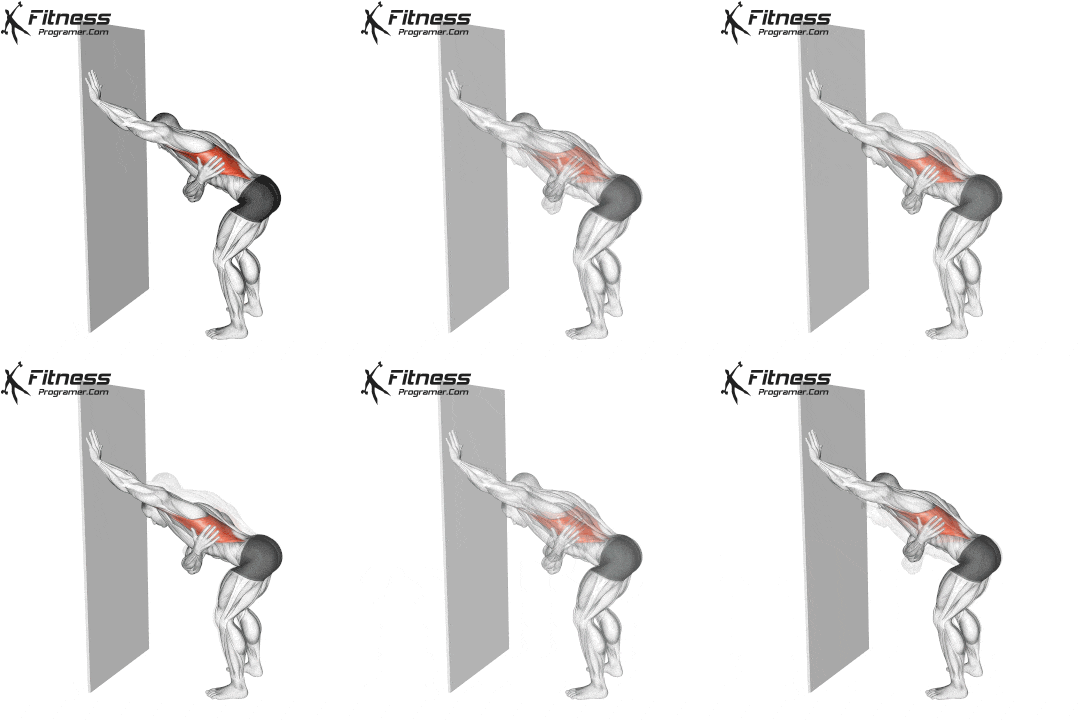
Starting Position:
Stand facing a wall at arm’s length.
Place one palm flat against the wall at about shoulder height or slightly above.
Step the same-side foot slightly back for stability.
Initiate the Stretch:
Bend slightly at the hips and knees.
Keep your arm straight and gently press the palm into the wall.
Deepen the Movement:
Push your hips backward while allowing your chest to drop toward the floor.
Rotate the torso slightly away from the wall to increase the lat stretch.
Hold and Breathe:
Maintain the stretch for the desired time.
Breathe slowly and deeply, focusing on relaxing the upper back and shoulders.
Switch Sides:
Return to the starting position.
Repeat the movement on the opposite side.
Tips for Proper Form
Keep your spine long rather than excessively rounding the back.
Maintain gentle pressure through the palm without locking the elbow.
Adjust arm height to target different areas of the lat muscle.
Move slowly into the stretch and avoid forcing range of motion.
Focus on steady breathing to enhance muscle relaxation.
Common Mistakes to Avoid
Bending the elbow and losing tension in the lat.
Rotating excessively through the lower back instead of the upper torso.
Holding the breath during the stretch.
Forcing the stretch beyond a comfortable range.
Shrugging the shoulder toward the ear instead of keeping it relaxed.
Benefits of the Unilateral Lat Stretch on the Wall
Improves Lat Flexibility: Helps lengthen the latissimus dorsi, supporting better overhead movement and pulling mechanics.
Enhances Shoulder Mobility: Encourages improved shoulder flexion and scapular movement.
Reduces Upper-Back and Side Tension: Relieves tightness caused by desk work, training volume, or limited thoracic mobility.
Supports Better Posture: Improved lat mobility can reduce excessive spinal extension and rounded shoulders.
Addresses Side-to-Side Imbalances: Unilateral execution allows focused work on tighter or restricted sides.
Aids Recovery and Relaxation: Slow breathing during the stretch promotes nervous system downregulation.
Routine Integration
For Beginners: Hold for 20–30 seconds per side, focusing on posture and breathing.
For Mobility Training: Include in upper-body mobility flows or shoulder routines.
For Functional Training: Pair with thoracic rotation drills for improved upper-body mechanics.
For General Fitness: Practice daily for 1–2 sets per side to maintain shoulder health.
For Recovery Days: Hold for 45–60 seconds per side during cooldowns or rest days.
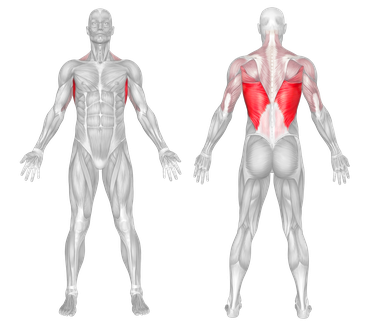
Muscles Worked
Frequently Asked Questions
Should my arm stay completely straight during the stretch?
Yes, keeping the arm straight helps maintain tension through the lat muscle.
Where should I feel the stretch?
You should feel it along the side of the upper back, from the shoulder down toward the waist.
Can I perform this stretch if I have shoulder tightness?
Yes, but keep the movement gentle and adjust arm height to stay comfortable.
How long should I hold the stretch?
Most people benefit from holding 20 to 60 seconds depending on flexibility.
Is this stretch suitable before workouts?
Yes, short holds can be used in warm-ups, while longer holds are better post-workout.
Can this stretch help with overhead mobility?
Yes, improved lat flexibility often leads to better overhead range of motion.