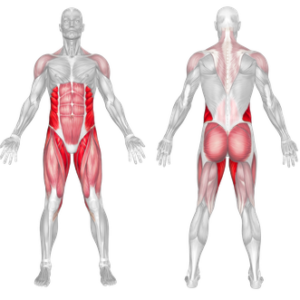
Overview
The Single Leg Dumbbell Side Bridge is a progression of the traditional side bridge performed with one foot on the ground and the opposite leg elevated. A dumbbell is held against the torso to increase anti-rotation demands. This setup forces the core and support-side hip muscles—especially the adductors—to work together to maintain pelvic alignment and balance.
How to Perform the Single Leg Dumbbell Side Bridge
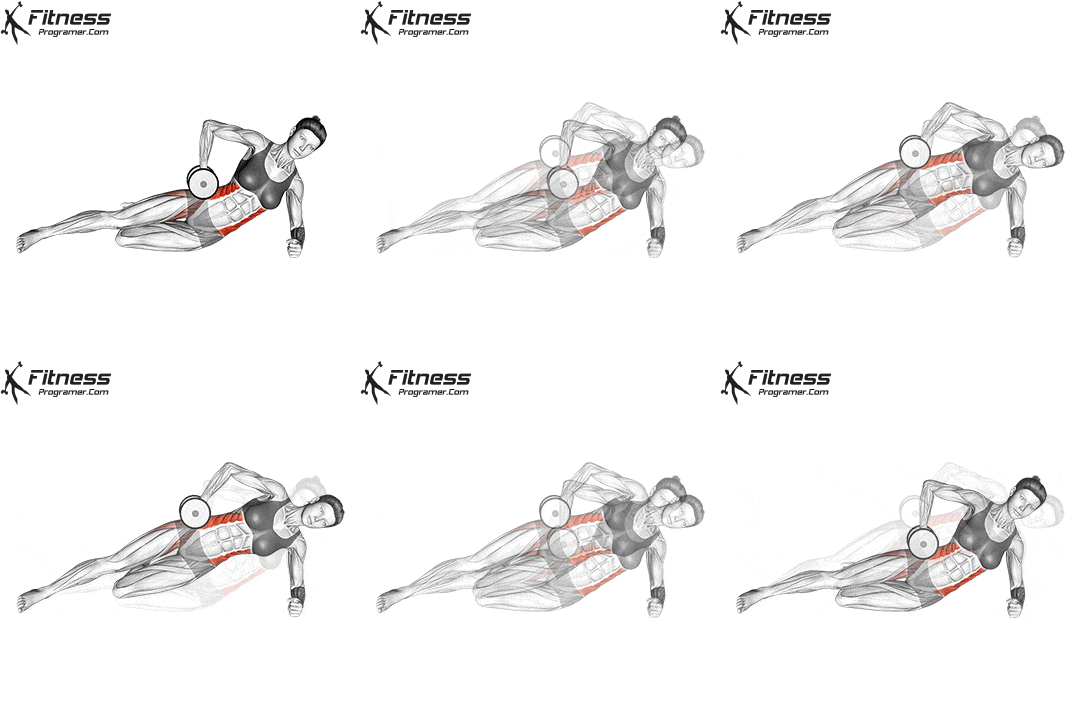
Starting Position:
Lie on your side. Place your forearm on the floor with the elbow directly under the shoulder.
Keep your bottom-side shoulder “packed” (stable), neck neutral, and ribs controlled.
Position your legs exactly as shown:
One leg stays straight with the foot on the floor (this is your support leg).
The other leg is bent at the knee and lifted, not resting on the ground.
Hold a dumbbell close against your side/hip with the top hand.
Build the Support Pillar:
Press the support foot into the floor.
Press the forearm into the ground.
Lift your hips so your body forms a strong line from support foot → hips → shoulder.
Stabilize and Lock In Alignment:
Keep the pelvis stacked and level—do not let the hips roll forward or backward.
Maintain tension through the side of the core to resist lateral bending.
Keep the dumbbell tight to the body to reduce unwanted rotation.
Hold and Breathe:
Breathe slowly without losing position.
Keep the supporting shoulder stable and avoid shrugging.
Switch Sides:
Lower with control.
Repeat on the opposite side.
Tips for Proper Form
Think “foot-to-shoulder pillar”: the support foot, pelvis, and shoulder should stay aligned.
Keep the free leg bent and lifted the entire time (do not let it rest).
Drive the floor away with your forearm and keep the shoulder stacked over the elbow.
Keep ribs down—avoid flaring the ribcage to cheat the hold.
Hold the dumbbell close to the torso to keep the exercise strict.
Common Mistakes to Avoid
Elbow drifting away from under the shoulder (stresses the joint).
Letting the hips sag or the pelvis twist.
Allowing the bent leg to touch the floor, reducing the stability demand.
Holding the dumbbell away from the body, creating unnecessary rotation.
Shrugging the shoulder toward the ear instead of staying “packed.”
Benefits of the Single Leg Dumbbell Side Bridge
- Builds Stronger Obliques: High tension on the lateral core improves anti-lateral flexion strength.
- Increases Adductor and Pelvic Stability Demand: Single-leg support requires the inner thigh and hip to help keep the pelvis level.
- Improves Frontal-Plane Control: Carries over to running mechanics, cutting, and single-leg sports movements.
- Enhances Anti-Rotation Strength: The dumbbell load challenges the torso to resist twisting.
- Strengthens Shoulder and Scapular Stability: The forearm support trains shoulder positioning under sustained tension.
- Useful for Performance and Injury Prevention: Supports groin, hip, and low-back resilience when performed with perfect alignment.
How to Incorporate the Single Leg Dumbbell Side Bridge Into Your Routine
For Beginners: Start with a standard side plank (knees down or stacked feet).
For Strength Training: Add 2–4 sets of 15–40 second holds per side after main lifts.
For Athletic Training: Use in unilateral stability circuits with lunges, step-ups, or lateral bounds.
For Adductor/Core Focus: Use longer holds (30–60 seconds) with strict pelvic control.
For Hypertrophy: Use moderate load and shorter holds (15–25 seconds) for multiple sets.
For General Fitness: 2–3 sets per side, 20–45 seconds, 2–4x/week.
Muscles Worked