
Overview
The Forward Bend is a foundational flexibility exercise commonly used in mobility routines, warm-ups, cooldowns, and yoga-based programs. It focuses on lengthening the posterior chain, particularly the hamstrings and lower back, while promoting relaxation and controlled breathing. It can be performed dynamically or statically and is widely used to improve lower-body flexibility, spinal mobility, and neuromuscular relaxation. When performed correctly, it supports joint health, posture, and overall movement quality.
How to Perform the Forward Bend
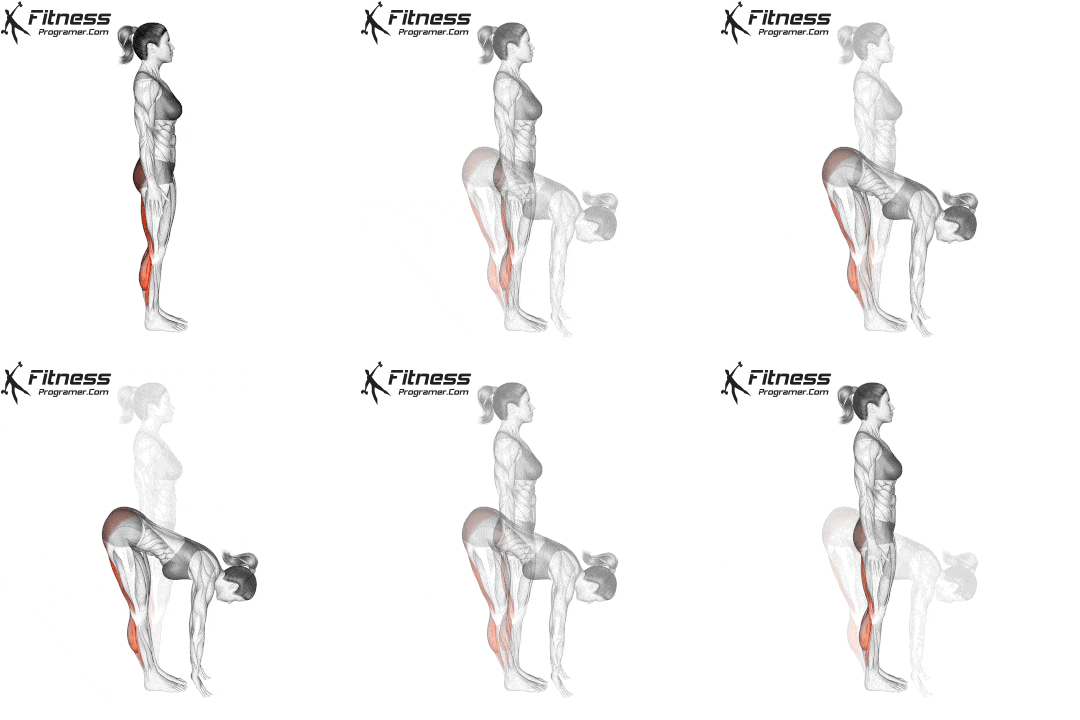
Starting Position:
Stand upright with feet hip-width apart.
Keep your weight evenly distributed and core gently engaged.
Initiate the Movement:
Inhale and prepare by lengthening the spine.
Exhale and hinge at the hips, allowing the torso to move forward.
Lower Into the Stretch:
Let your arms hang naturally toward the floor.
Keep the knees slightly bent if hamstring flexibility is limited.
Hold and Breathe:
Relax the neck and shoulders.
Maintain the position while breathing slowly and deeply.
Return to Standing:
Engage your core and glutes.
Slowly roll or hinge back up to the starting position.
Tips for Proper Form
Prioritize a hip hinge rather than rounding excessively through the spine.
Keep your neck relaxed and avoid forcing the stretch.
Bend the knees slightly to reduce strain on the hamstrings.
Focus on controlled breathing to encourage muscle relaxation.
Stop at a depth where you feel a stretch, not pain.
Common Mistakes to Avoid
Locking the knees and overstretching the hamstrings.
Forcing the hands to reach the floor at the expense of form.
Holding the breath during the stretch.
Bouncing at the bottom instead of holding a controlled position.
Benefits of the Forward Bend
Improves Hamstring Flexibility: Regular practice helps lengthen the hamstrings, supporting better squatting, hinging, and running mechanics.
Enhances Spinal Mobility: Encourages gentle spinal flexion and decompression, promoting healthier movement patterns.
Reduces Muscle Tension: Helps release tightness in the lower back, hips, and posterior chain after training or prolonged sitting.
Supports Postural Awareness: Improves awareness of hip hinge mechanics, which carry over to deadlifts and squats.
Promotes Relaxation and Recovery: Slow breathing in the stretch can reduce nervous system stress and aid recovery.
Accessible for All Fitness Levels: Easily modified through knee bend or range of motion adjustments.
How to Incorporate the Forward Bend Into Your Routine
The Forward Bend can be adapted for flexibility, recovery, and movement preparation across many training styles.
For Beginners: Hold for 20 to 30 seconds with bent knees, focusing on breathing and relaxation.
For Functional Training: Include as part of a mobility flow emphasizing hip hinge mechanics.
For Circuit Training: Use short holds between rounds to reset breathing and posture.
For General Fitness: Practice daily for 1 to 2 sets of 30 to 45 seconds to support movement quality.
For Mobility and Recovery: Hold longer durations of 45 to 60 seconds during cooldowns or rest days.
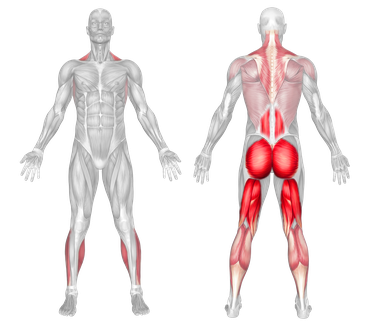
Forward Bend Muscles Worked
Frequently Asked Questions
Should my legs be straight during the Forward Bend?
Slight knee bend is recommended, especially if hamstring flexibility is limited.
Is it normal to feel tension in the lower back?
Mild stretching sensation is normal, but sharp pain indicates excessive rounding or depth.
Can the Forward Bend help with lower back stiffness?
Yes, when performed gently, it can reduce tension and promote spinal relaxation.
How long should I hold the Forward Bend?
Most people benefit from 20 to 60 seconds depending on flexibility and comfort.
Should I perform this stretch before or after workouts?
It works best after training or as part of a cooldown. Dynamic versions can be used in warm-ups.
Is the Forward Bend safe for everyone?
Most individuals can perform it safely, but those with disc issues should limit spinal flexion and consult a professional.