
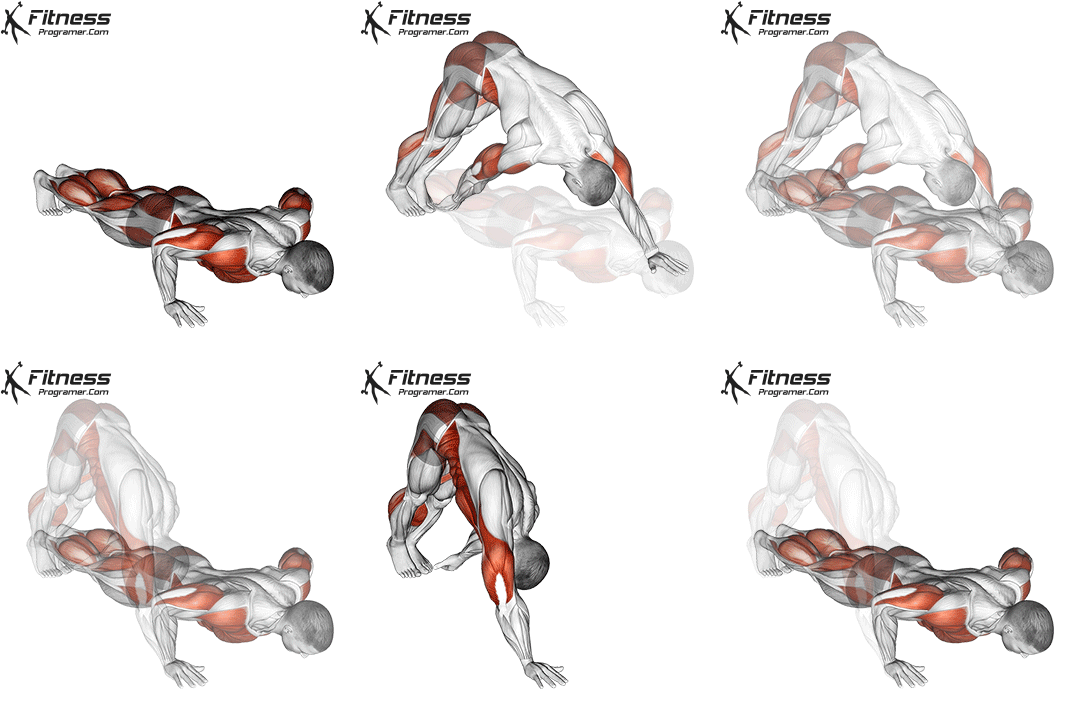
Push-up Toe Touch
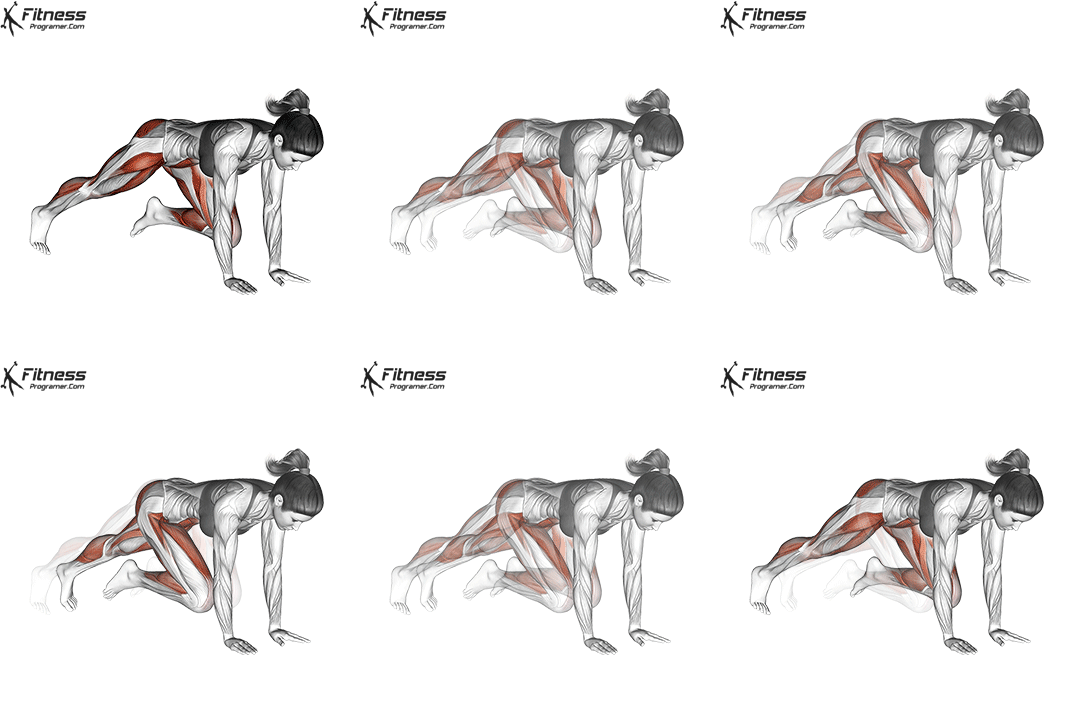
Mountain Climber
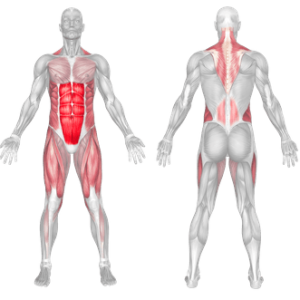
Mountain Climbers are a dynamic exercise that primarily targets the core muscles, including the abdominals, obliques, and hip flexors. Mountain Climbers are typically performed at a fast pace to increase the cardiovascular intensity. However, you can also modify the speed to match your fitness level and goals.
How to do:
1- Assume a normal press-up position with your weight on your hands and toes, your back and legs straight, and your hands shoulder-width apart.
2- In one quick but controlled movement, bring your right knee up toward your chest, placing the ball of your right foot on the floor at the edge of the movement.
3- Lightly spring up with your legs and switch feet, bringing your left foot up toward your chest as you push back with the right. Continue alternating your feet for the required number of reps, then relax to the start position.
Mountain Climber Benefits
- Mountain climber are an effective cardio and core strengthening workout. It can help you strengthen and develop both upper and lower body muscles.
- Being a multi-functional movement, this exercise targets not only your abdominal muscles but also the spine and buttocks. Mountain climber strengthens and tightens your entire body, improves your posture and balance, reduces body fat and can help speed up your metabolism.
- Mountain climbers are beneficial for your health because they combine cardiovascular fitness with strength training. Because fast strides increase your heart rate, they can also increase your cardiovascular fitness.
The Mountain Climber Muscles Worked
Bicycle Crunch
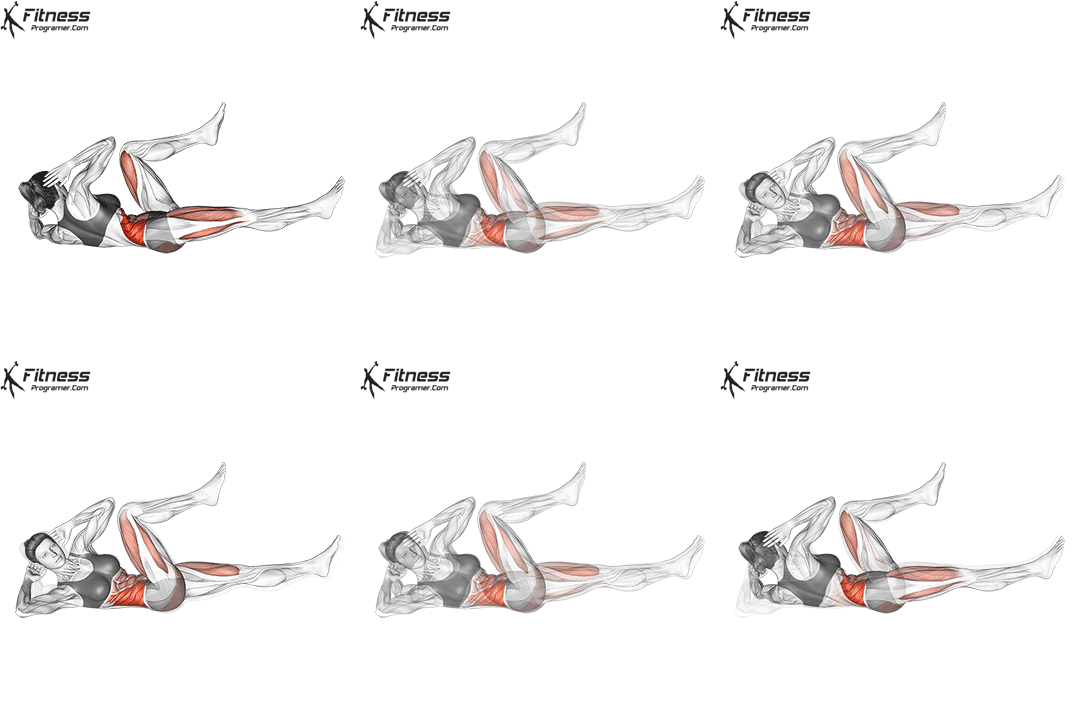
The Bicycle Crunch, a dynamic abdominal exercise, effectively targets the core muscles, including the obliques and rectus abdominis, by combining both upper and lower body movements. This effective exercise involves a dynamic combination of twisting and cycling-like motions, making it a valuable addition to any core strengthening routine.
How to do:
As with any exercise, it’s essential to perform it with proper form and technique to maximize benefits and minimize the risk of injury. Here’s how you can perform the Bicycle Crunch:
- Starting Position:
- Lie flat on your back on a mat or a comfortable surface.
- Place your hands behind your head, elbows pointing outward.
- Lift your legs off the ground, bending your knees at a 90-degree angle. This is your starting position.
- Execution:
- Lift your head, shoulders, and feet off the ground, engaging your core muscles.
- As you lift, bring your right elbow and left knee toward each other in a twisting motion.
- At the same time, straighten your right leg, keeping it elevated above the ground.
- Simulate a cycling motion by alternately bringing your left elbow toward your right knee while straightening your left leg.
- Continue this pedaling motion, making sure to engage your core and avoid pulling on your neck with your hands.
- Breathing:
- Exhale as you twist and bring your elbow to the opposite knee.
- Inhale as you switch to the other side.
- Repeat:
- Continue the pedaling motion for a specific number of repetitions or a set duration.
Tips:
- Focus on controlled and deliberate movements to engage the abdominal muscles effectively.
- Keep your lower back pressed into the floor to maintain proper form. The emphasis is on the twisting motion, engaging both the upper and lower body.
- Avoid pulling on your neck with your hands; instead, use your core to lift your upper body.
Benefits of Bicycle Crunch
Bicycle crunches are a popular abdominal exercise that offers several benefits for those looking to strengthen their core and improve overall fitness. Here are some key benefits of bicycle crunches:
1- Rectus Abdominis Activation:
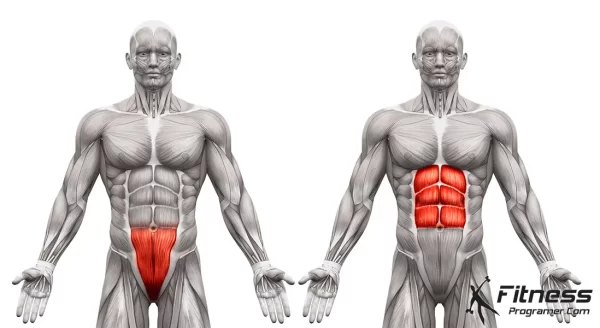
The rectus abdominis is a long, flat muscle that extends vertically along the front of the abdomen. Bicycle crunches are effective at targeting both the rectus abdominis (upper and lower abdominal muscles) and obliques (muscles on the sides of your abdomen).
- Upper Abdominal Activation:
The bicycle crunch is a dynamic movement involving a curling motion. Lifting your head and shoulders off the ground engages the upper part of the rectus abdominis, promoting the development of a well-defined upper abdominal region. This muscle is responsible for the “six-pack” appearance when well-defined.
- Lower Abdominal Activation:
Simultaneously, as your legs are raised and brought toward your chest, the lower part of the rectus abdominis comes into play. This leg movement challenges and strengthens the lower abdominal muscles, contributing to a balanced core workout.
2- Obliques Activation:
The obliques are a group of abdominal muscles located on the sides of the abdomen. There are two sets of oblique muscles on each side of the body: the external obliques and the internal obliques. Incorporating the bicycle crunch into your fitness routine serves as a dynamic and efficient strategy for targeting both the rectus abdominis and obliques.
- Rotation:
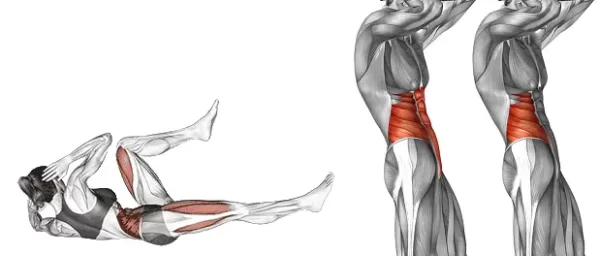
As you bring your right elbow toward the left knee and vice versa, your torso twists, activating the obliques. This rotation not only targets the external obliques on the sides of your abdomen but also engages the internal obliques deeper within.
- Crossing Movement:
Incorporating a crossing movement across the midline of your body elevates the challenge for your obliques. This action intensifies the activation of both the internal and external obliques, contributing to a more comprehensive core workout.
3- It works the muscles from every angle:
The rotational aspect of the bicycle crunch allows for the engagement of core muscles from different angles. This multi-directional approach helps tighten, develop, and strengthen the core muscles, including even the smaller muscle fibers.
4- Engaging Hip Flexors:
Bicycle Crunch also targets your hip flexors. While your rectus abdominus muscle stabilizes your core during exercise, your hip flexors take on the task of raising your knees. By combining upper and lower body at the same time, the muscles work in harmony. This engagement not only strengthens the hip flexors but also enhances overall mobility and flexibility. This situation is very beneficial in terms of your mobility and flexibility.
5- Improves coordination:
When you pedal like cycling, movements that force you to use opposite working arms and legs at the same time can help improve your coordination. As your coordination gain increases, your ability to practice movement skills begins to increase.
6- Cardiovascular Benefits:
While not a cardiovascular exercise on its own, including bicycle crunches in a circuit or high-intensity interval training (HIIT) routine can contribute to an increased heart rate and cardiovascular benefits. Bicycle crunches, like other high-intensity exercises, can contribute to burning calories and may be part of a well-rounded fitness routine for weight management.
Bicycle Crunch: Muscles Worked
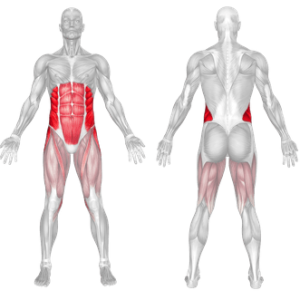
Here are the primary muscles worked during bicycle crunches:
- Rectus Abdominis:
- The rectus abdominis is the muscle running vertically along the front of the abdomen, commonly referred to as the “six-pack.” Bicycle crunches are effective in activating and strengthening this muscle.
- Obliques (Internal and External):
- The oblique muscles, both internal and external, are located on the sides of the abdomen. Bicycle crunches involve a twisting motion, which targets the obliques and contributes to waist and core stability.
- Transverse Abdominis:
- The transverse abdominis is the deepest layer of abdominal muscles and plays a crucial role in providing stability to the spine. It is engaged during bicycle crunches to support the core.
- Hip Flexors:
- The hip flexors, including the iliopsoas, are involved in lifting the legs during the bicycle crunch motion. This engagement contributes to the dynamic nature of the exercise.
- Quadriceps:
- The quadriceps, located on the front of the thighs, are engaged as you extend and straighten your legs during the bicycle crunch movement.
- Tensor Fasciae Latae (TFL):
- The TFL is a muscle located on the outside of the hip and is involved in the rotational aspect of the bicycle crunch.
- Lower Back (Erector Spinae):
- The erector spinae muscles, which run along the spine, are engaged to some extent to stabilize the lower back during the lifting and twisting movements.
How to T-Cross Sit-up
T-Cross Sit-up Benefits
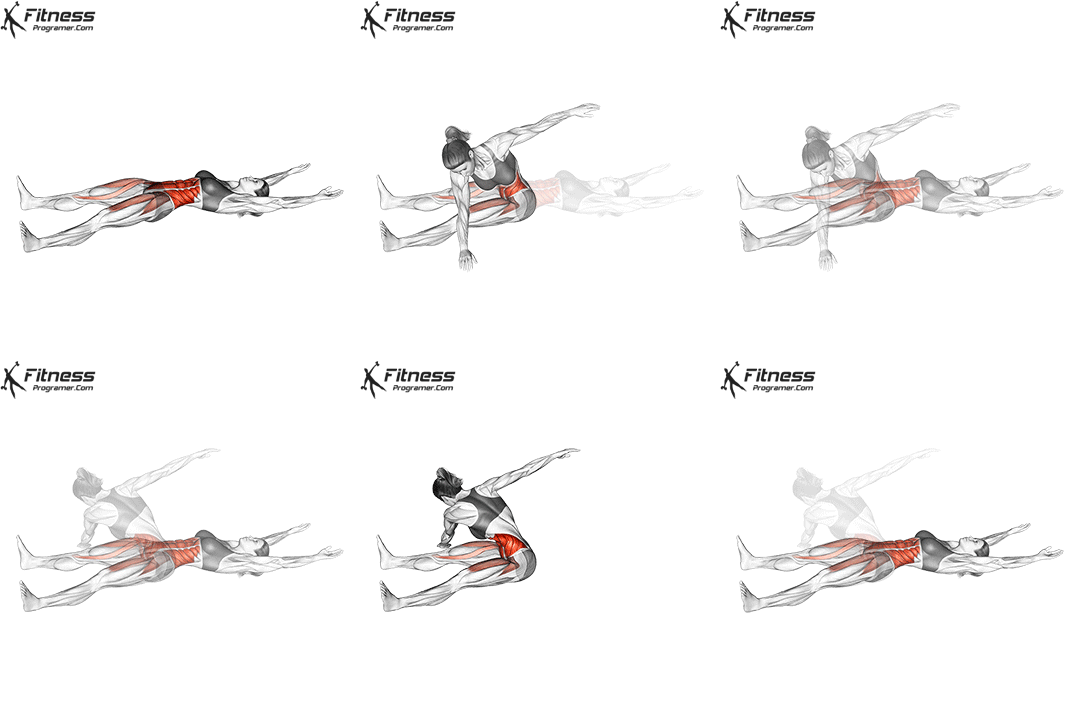
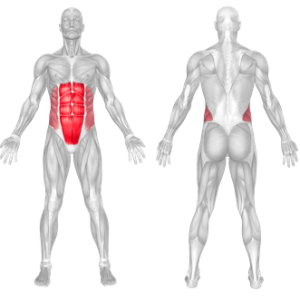
- It works all the abdominal muscles: The T-Cross sit-up exercise targets the rectus abdominus and oblique muscles. It is a beneficial exercise for fat loss and tightening as it has an intense effect on the oblique muscles.
Muscles Worked in The T-Cross Sit-up
Power Skips
Plyo Jacks
Split Jacks
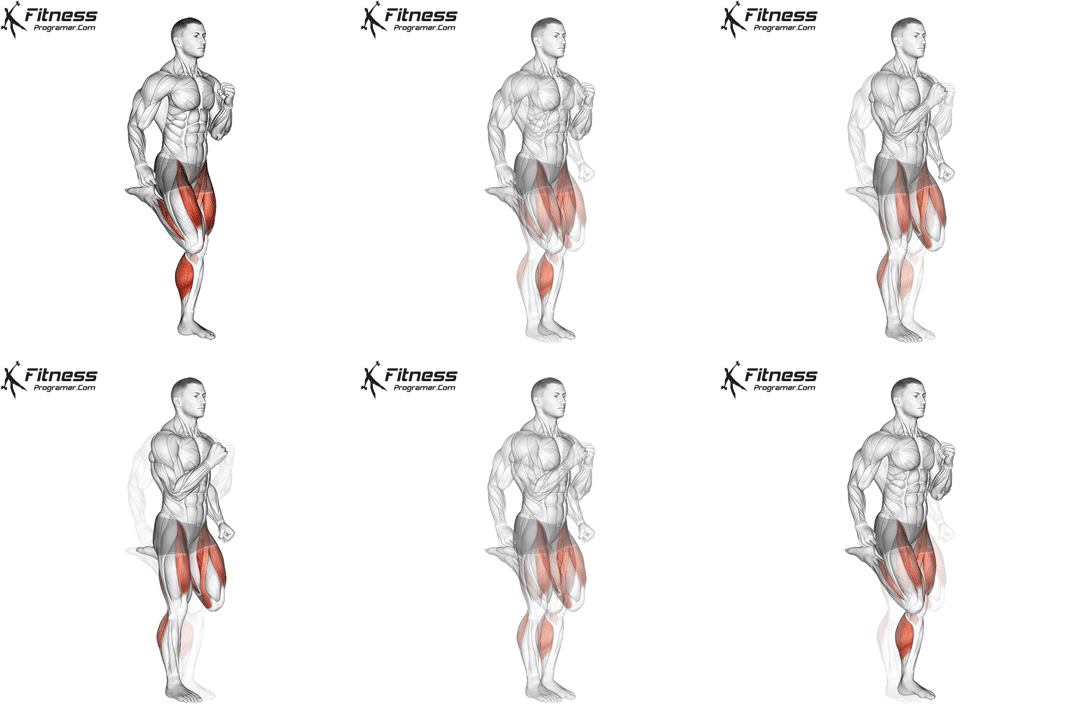
How to do Butt Kicks
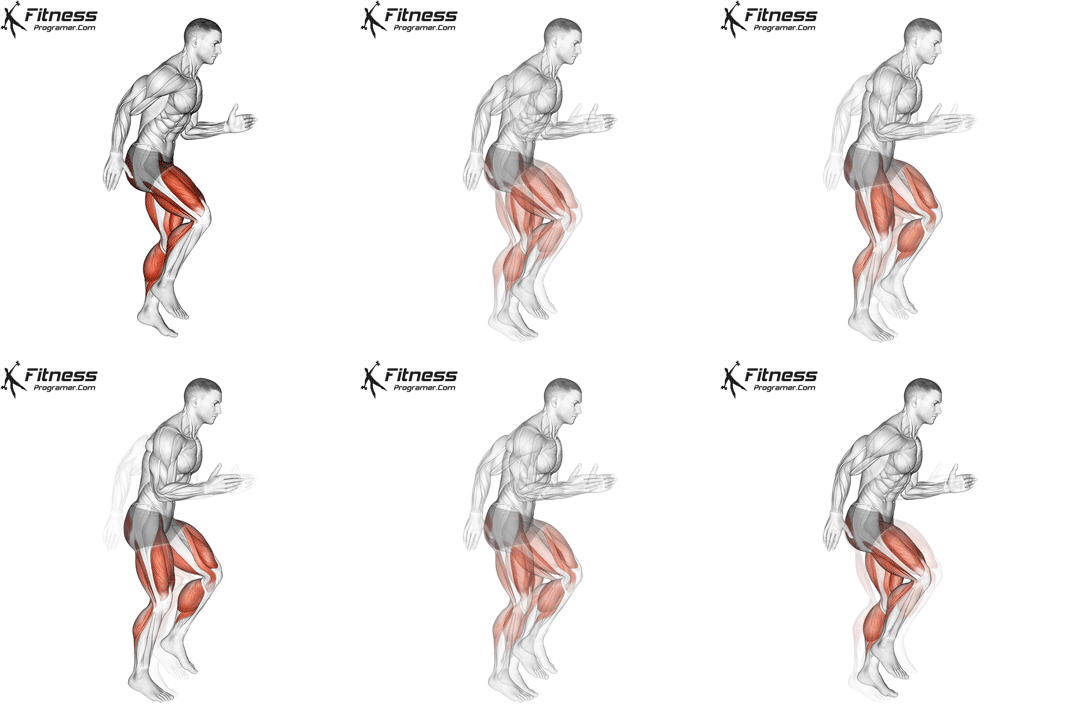
Fast Feet Run
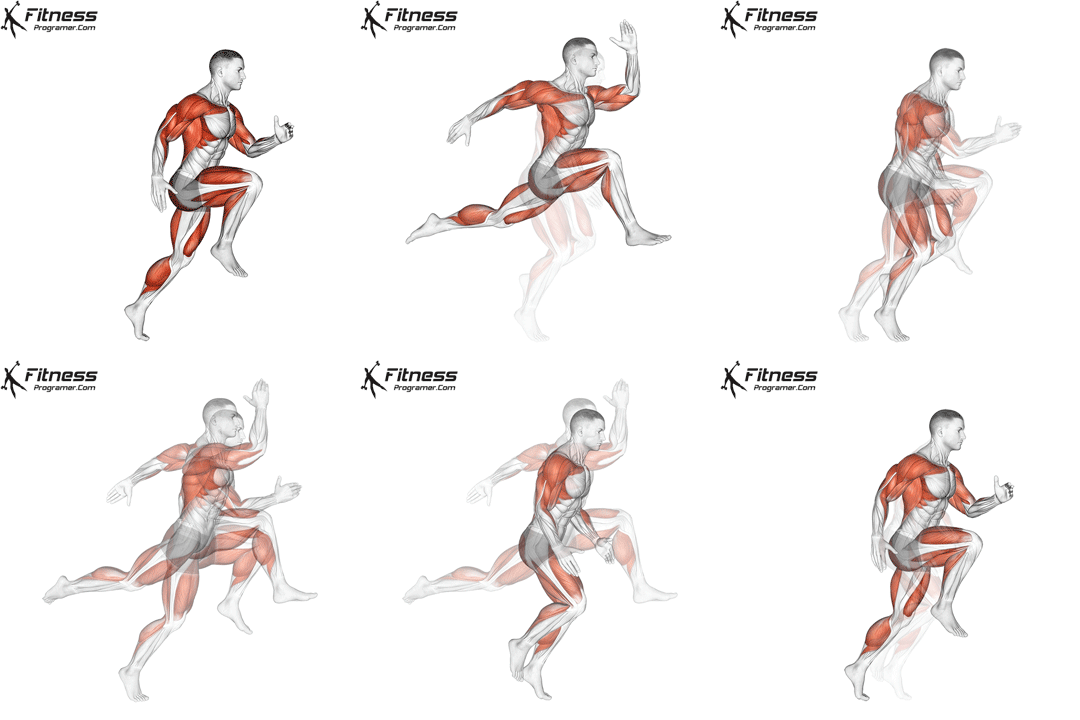
Wheel Run